- fishtakes
- fish guide
- pouting
Is pouting sustainable?
Short answer · in moderation
Pouting is a small, wild white fish from the cod family. There is no quota and the stock is not scientifically monitored, so its state is unknown. The Belgian seafood guide (Zeevruchtengids) advises eating pouting in moderation, preferably line-caught.
Updated · North Sea (Belgium)
- Latin name
- Trisopterus luscus
- Wild or farmed
- Wild
- Origin
- Channel, North Sea, Bay of Biscay
- Status
- Unknown, no quota
- Belgian landings
- 192 tonnes in 2025
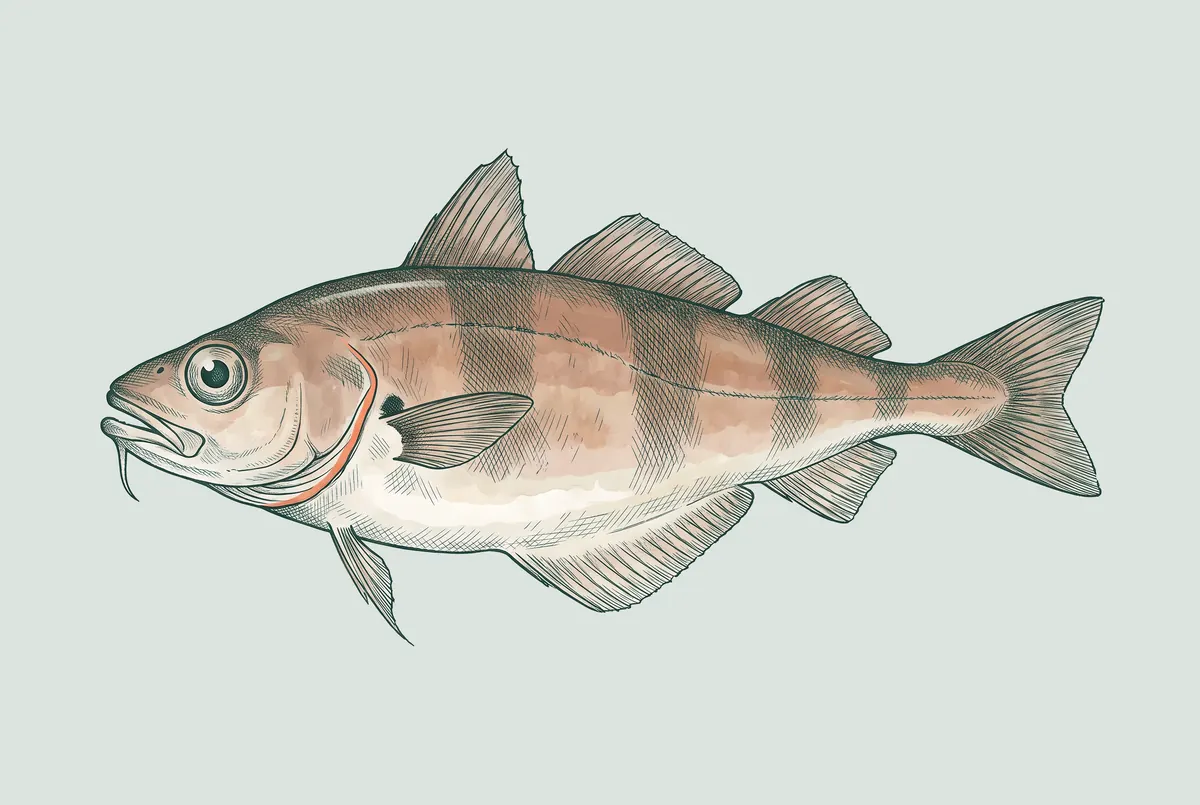
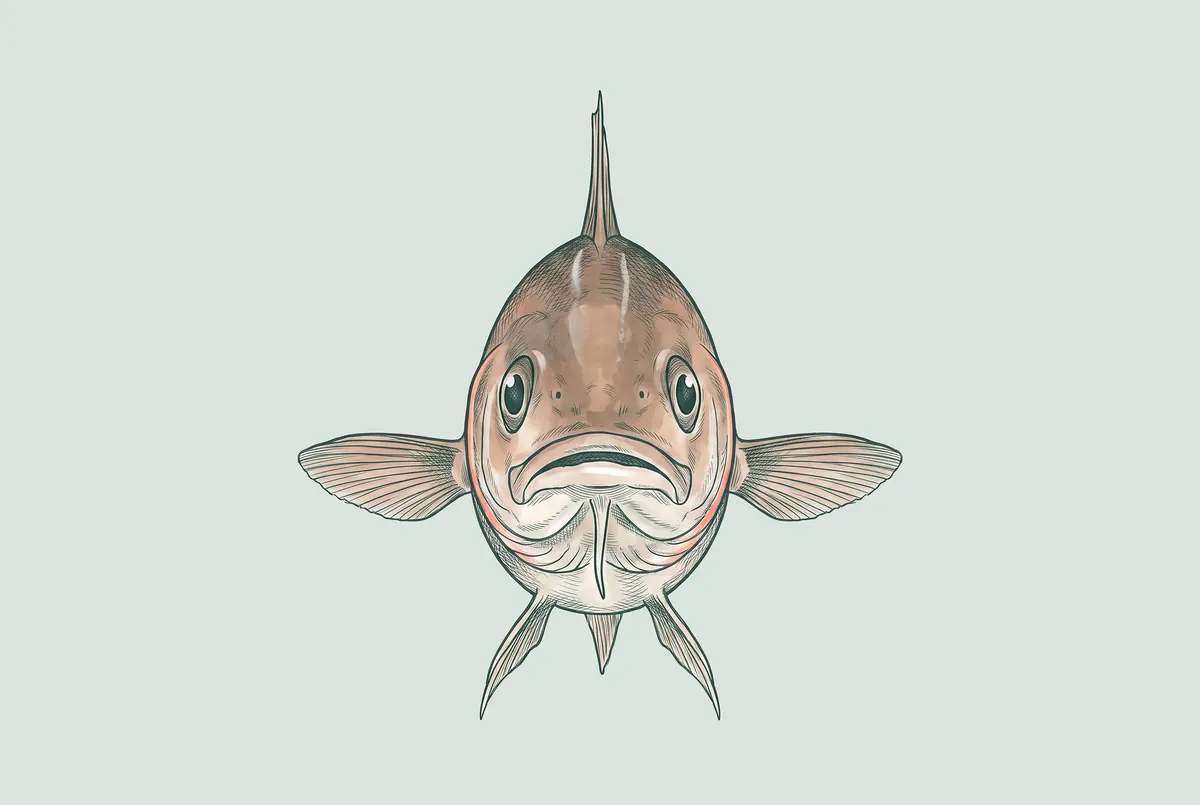
three views
How to recognise pouting
How is the stock doing?
The pouting stock is not scientifically monitored, so its state is unknown. There is no quota and no European minimum size, which means pouting does not fall under the landing obligation. Pouting remains one of the most discarded species. The Dutch VISwijzer writes that the stock is not doing well.
What to look for when buying
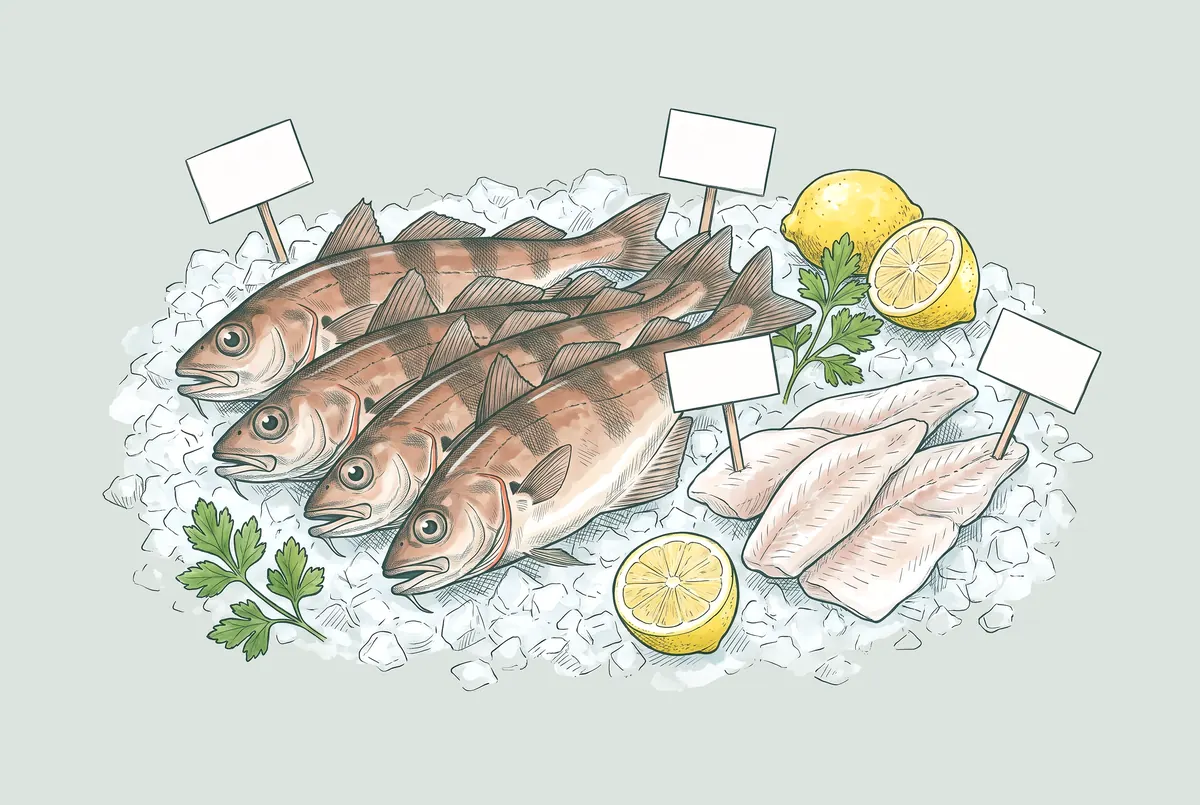
Eat pouting in moderation and choose fish longer than 25 centimetres, or large fillets from adult fish. Line-caught pouting is preferred. The flesh is fine but delicate, so buy it as fresh as possible. Frozen fillets keep their flavour well.
Pouting in Belgium
In 2025 the Belgian fleet landed 192 tonnes of pouting, at an average of 0.67 euros per kilo in Belgian ports. Of the pouting on offer, 18% was withdrawn from the market because the price was too low.
Questions about pouting
Is pouting sustainable?
The state of the stock is unknown. So eat pouting in moderation, preferably line-caught.
Is pouting the same as whiting?
No. Pouting, Trisopterus luscus, is a different species from the cod family, with an oval, flattened body and a clear chin barbel.
Sources
- Zeevruchtengids (ILVO, VLIZ), Steenbolk (mei 2025)
- Good Fish, VISwijzer steenbolk (geraadpleegd oktober 2026)
- Landbouw en Visserij Vlaanderen, De Belgische zeevisserij 2025 (1 juli 2026)
Consulted in October and November 2026.
More: north Sea fish
- plaicewell above target
- whitingwell above target
- haddockask where it was caught
- monkfishask where it was caught
- skateask which species
- turbotNorth Sea: above target
- brillabove target
- sea bassASC or line-caught
- lesser spotted dogfishin moderation
- tub gurnardin moderation
- lemon solehealthy stock
- hakenorthern stock OK
- dabin moderation
- mackereloverfished
- spratvaries by area
- flounderlittle data
- Atlantic wolffishchoose MSC (Iceland)
- horse mackerelavoid the North Sea
- grey gurnardin moderation
- red gurnardin moderation
- megrimhealthy stock