Which tuna is sustainable?
Short answer · choose MSC
Tinned tuna is usually skipjack, a wild species that comes mainly from the Pacific Ocean. Choose tuna with an MSC label, preferably caught by pole and line. Yellowfin tuna from the Indian Ocean is overfished.
Updated · Tropical oceans (canned)
- Latin name
- Katsuwonus pelamis
- Wild or farmed
- Wild
- Skipjack origin
- Pacific 69%, Indian 22%, Atlantic 9%
- Avoid
- Yellowfin tuna from the Indian Ocean
- Certification
- MSC, preferably pole and line or FAD-free
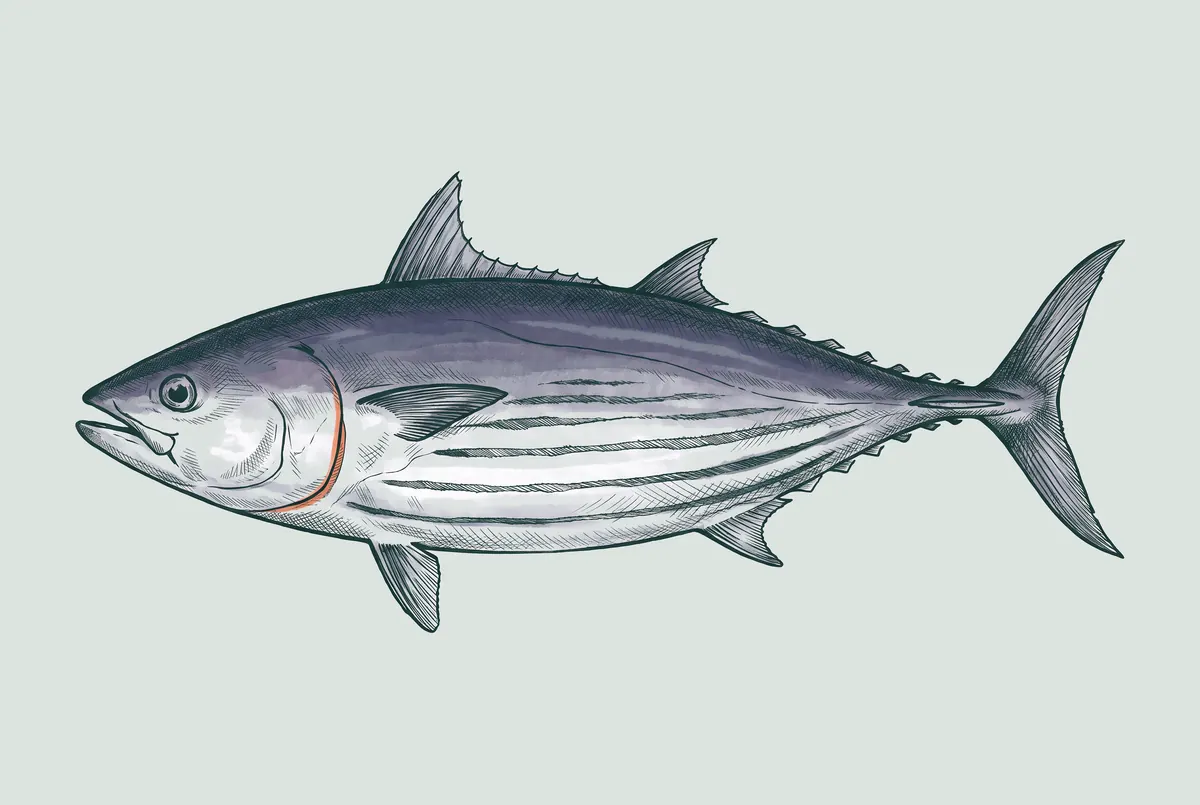
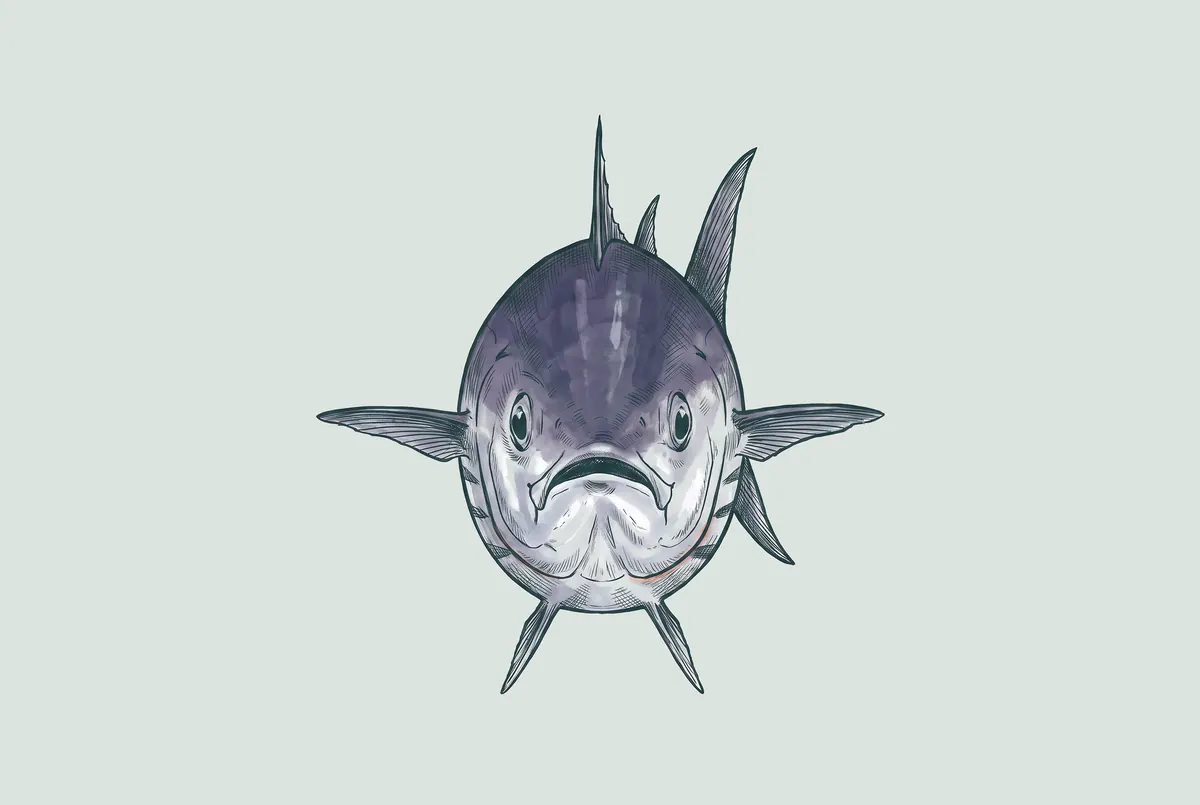
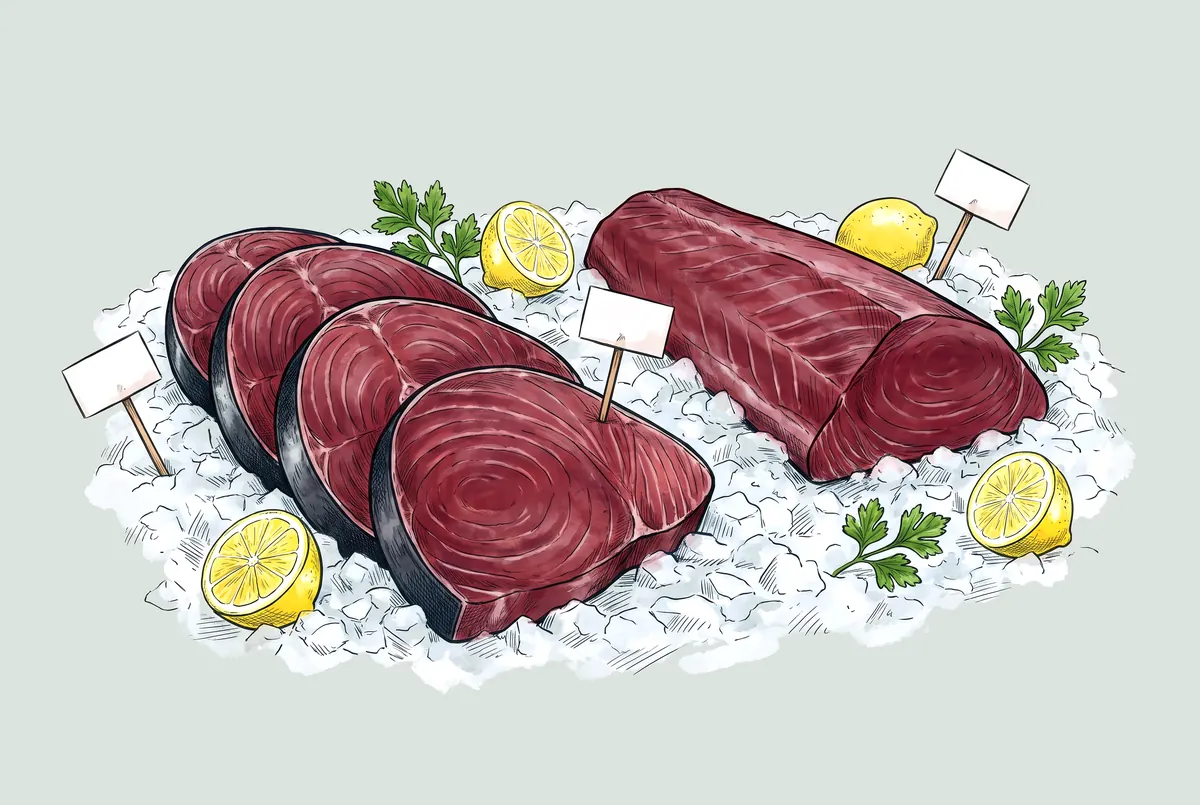
three views
How to recognise tuna
How is the stock doing?
Yellowfin tuna from the Indian Ocean is overfished and the Belgian seafood guide (Zeevruchtengids) advises against it. Around 60% of skipjack is caught at FADs, floating devices that attract fish. Good Fish recommends pole-and-line or FAD-free tuna.
What to look for when buying
In the EU, the species name does not have to be on a tin. So look for the MSC logo and for statements such as pole and line or FAD-free.
Tuna in Belgium
The volume of MSC tuna in Belgium grew in five years from 5,943 to 9,838 tonnes, of which more than 8,000 tonnes was skipjack.
Questions about tuna
Which tuna is the most sustainable?
Skipjack with an MSC label, preferably caught by pole and line or FAD-free. Yellowfin tuna from the Indian Ocean is overfished.
Is the tuna species on the tin?
Not always. In the EU, the species name on a tin of tuna is not required. The MSC logo does give you certainty about the fishery.
What is a FAD?
A FAD (fish aggregating device) is a floating device that tuna gather around. Around 60% of skipjack is caught this way.
Sources
- Zeevruchtengids (ILVO, VLIZ), Gestreepte tonijn
- Zeevruchtengids, Geelvintonijn (2025)
- Good Fish, Kun je nog tonijn eten? (2024)
- MSC, Belgische consument kiest steeds vaker voor duurzame tonijn (mei 2026)
Consulted in October and November 2026.