- fishtakes
- fish guide
- wels catfish
Is wels catfish sustainable?
Short answer · farmed, invasive in Spain
Wels catfish is a good choice. It is farmed in ponds in Central Europe, and in Spain, Italy and France it is an invasive giant that eats native fish. Eating wild wels from those rivers helps.
Updated · Hungary, Spain, Eastern Europe
- Latin name
- Silurus glanis
- Wild or farmed
- Farmed and wild
- Where
- Hungary, Czech Republic, Spain, Italy
- Status
- Least concern; invasive in the west
- Size
- Can exceed 2.5 metres
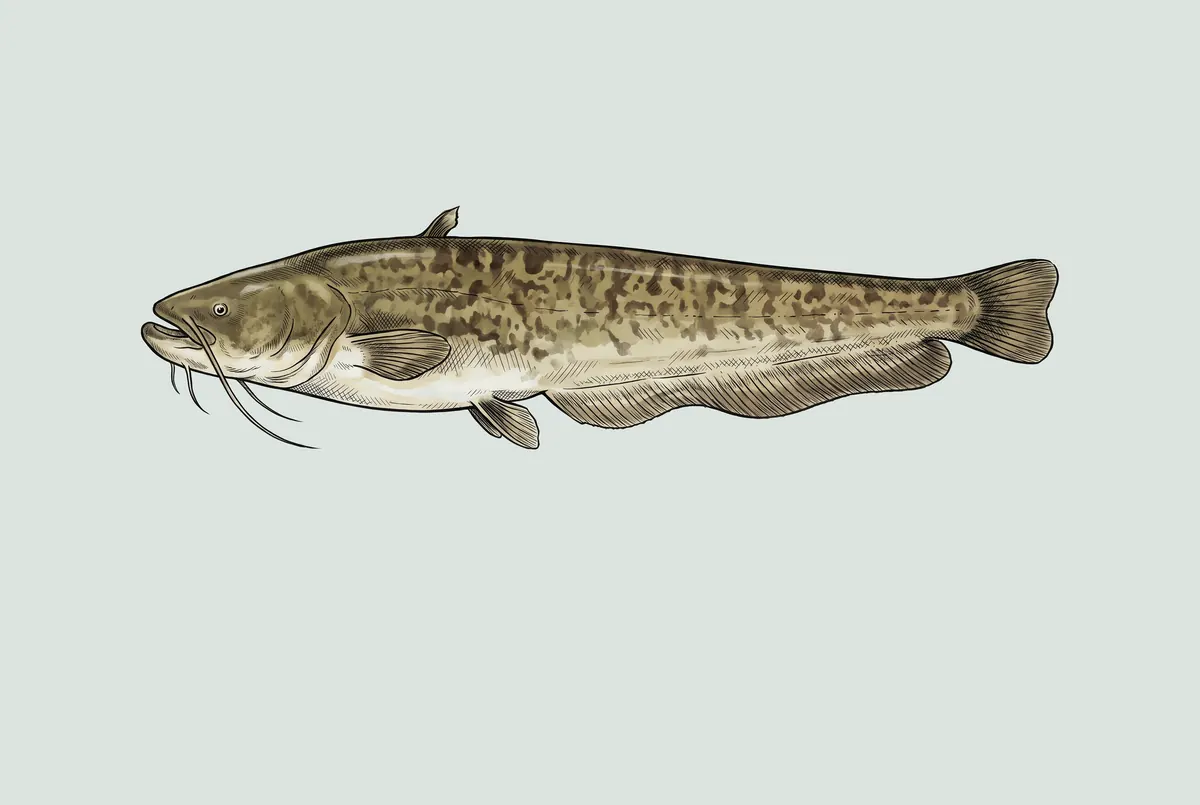
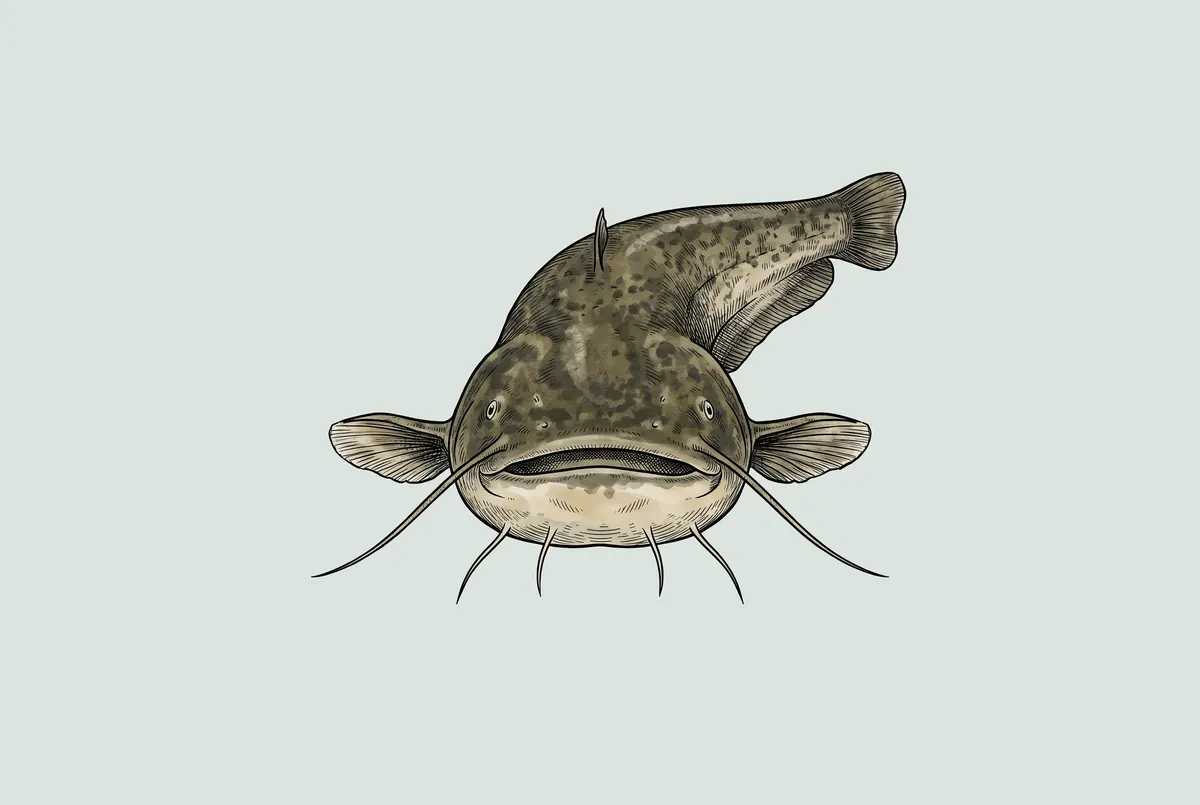
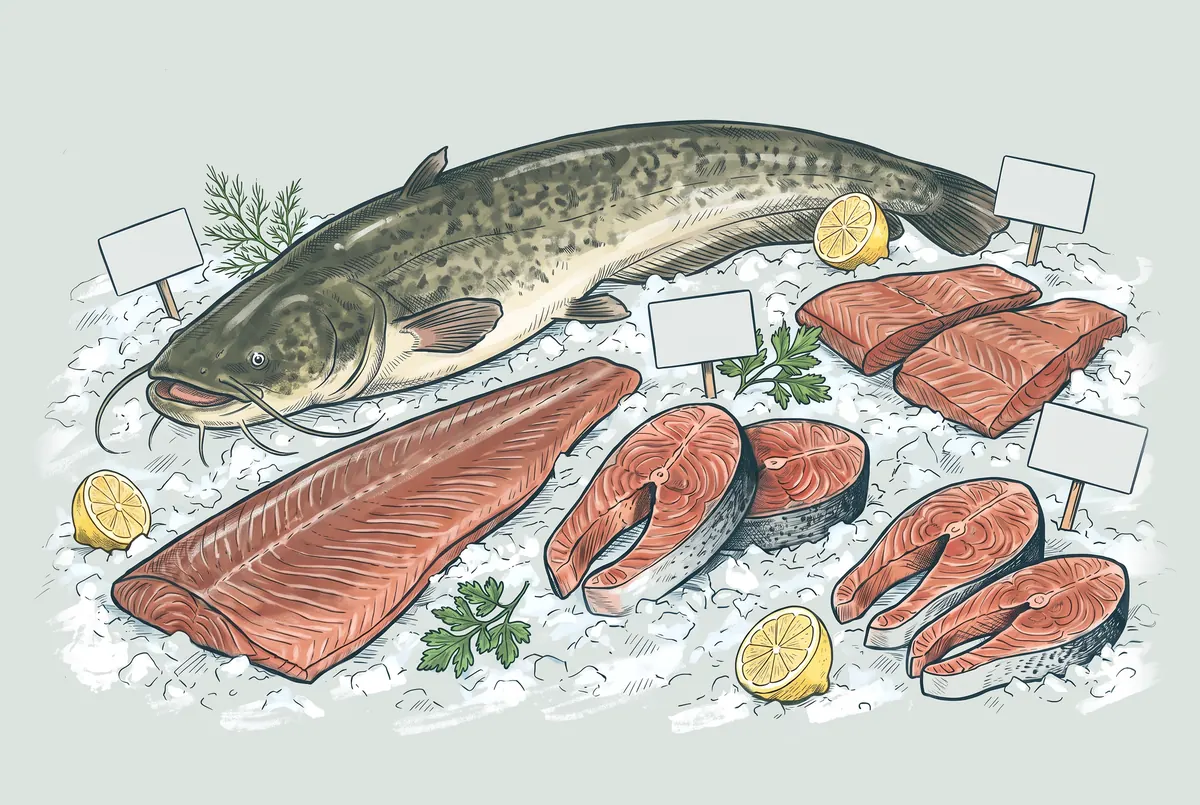
three views
How to recognise wels catfish
How is the stock doing?
Anglers introduced wels into the Ebro in Spain in the 1970s. It now dominates many rivers in Western Europe.
What to look for when buying
Choose farmed wels or wild fish from rivers where it is invasive.
Wels catfish in Hungary
In Hungary, harcsapaprikás, catfish in paprika sauce with noodles, is a classic. In Poland, sum is served at Christmas.
Questions about wels catfish
How big can wels get?
Over 2.5 metres and more than 100 kilograms.
Why is wels invasive in Spain?
It was introduced by anglers and has no natural predators there.
Sources
Consulted in October and November 2026.
More: freshwater fish
- eelcritically endangered
- troutcheck the origin
- salmon troutcheck the origin
- zandercheck the origin
- perchfarmed is better
- African catfishEuropean farmed
- carpgood choice
- grass carpfarmed, plant-eating
- silver carpeat the invader
- bighead carpeat the invader
- rohufarmed in ponds
- catlafarmed in ponds
- crucian carppond fish, least concern
- Wuchang breamfarmed, least concern
- striped snakeheadfarmed: fine
- channel catfishUS farmed: good
- northern pikelocal, wild
- walleyewell managed
- lake whitefishsome lakes declining
- tambaquifarmed: good
- Murray codwild vulnerable, farmed ok
- Asian swamp eelcheck the origin
- sterletwild endangered, farmed ok
- blue tilapiafarmed: good
- tenchpond-farmed
- graylingmostly protected