- fishtakes
- fish guide
- blue shark
Is blue shark sustainable?
Short answer · shark, CITES II
Blue shark is caught in very large numbers on tuna and swordfish longlines, for its fins and meat. It is listed as near threatened and was added to CITES Appendix II in 2022. Shark meat is best avoided.
Updated · Worldwide (Spain, Portugal fleets)
- Latin name
- Prionace glauca
- Wild or farmed
- Wild, longline
- Where
- Worldwide; Spanish and Portuguese fleets
- Status
- Near threatened (IUCN), CITES II
- Use
- Fins, meat
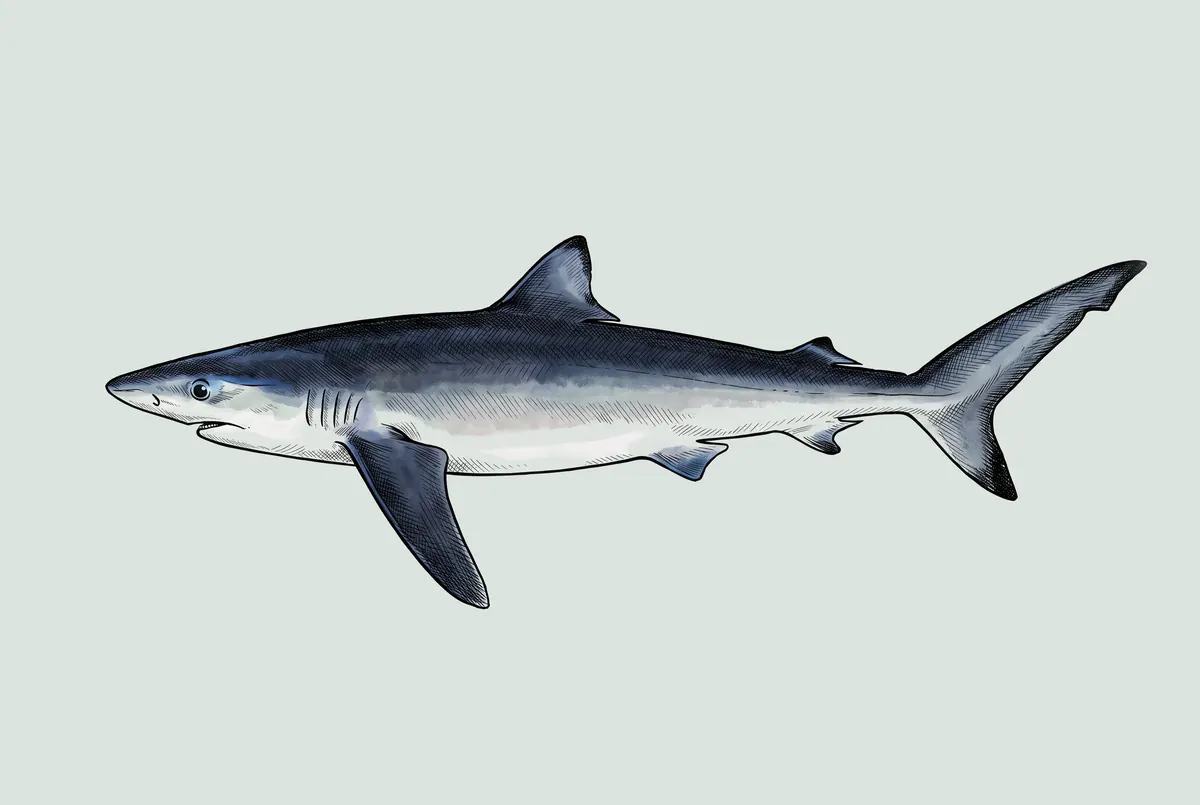
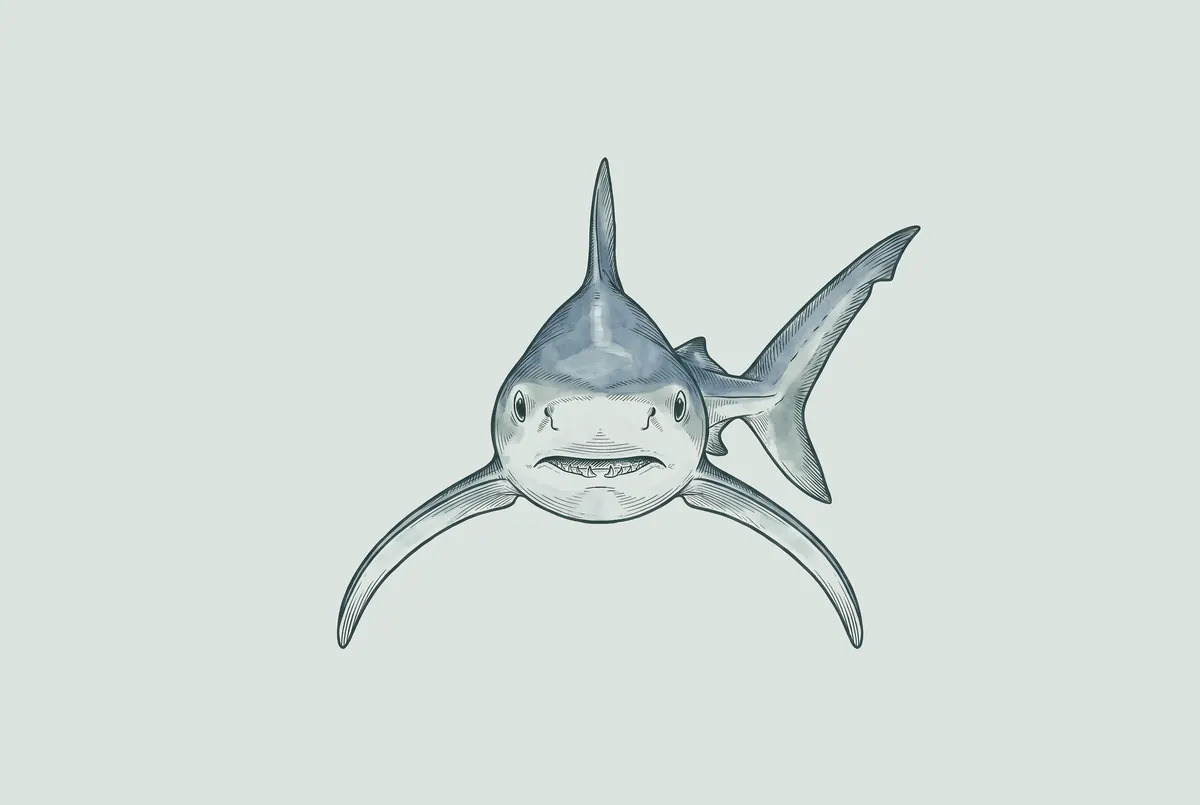
three views
How to recognise blue shark
How is the stock doing?
Blue sharks breed faster than most sharks, which helps, but tens of millions are killed every year. Spain and Portugal land a large share of the reported catch.
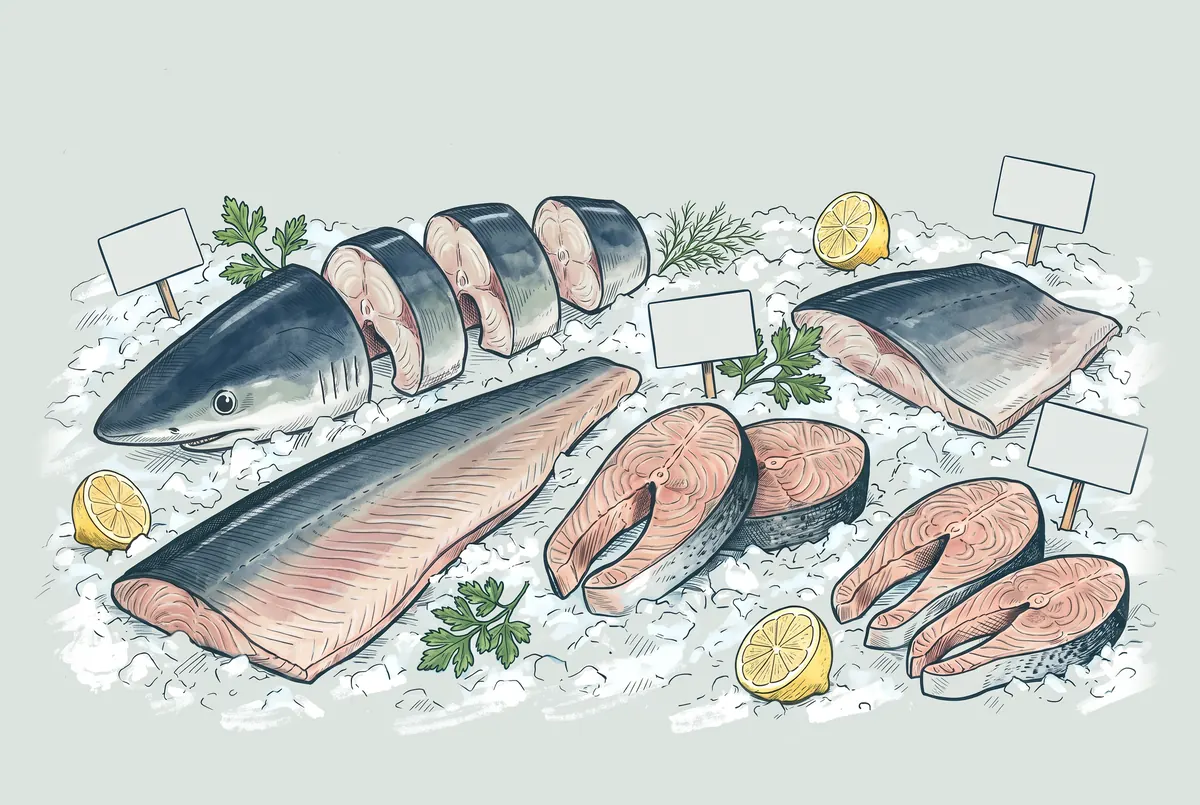
What to look for when buying
Do not buy shark meat or fin soup. Shark is often sold under other names, such as tintorera or cação.
Blue shark in Spain
In Brazil, cação, often blue shark, is used in moqueca. Shark fin soup in Hong Kong and China drove the fin trade.
Questions about blue shark
Why was blue shark added to CITES?
Requiem sharks, including the blue shark, were listed in 2022 to control the fin trade.
Is shark meat safe?
It often contains high levels of mercury.
Sources
Consulted in October and November 2026.
More: ocean fish of the world
- yellowfin tunacheck the ocean
- bigeye tunaAtlantic: overfished
- Pacific bluefin tunarecovering from very low
- southern bluefin tunaendangered, recovering
- swordfishcheck ocean and gear
- Pacific codAlaska: MSC
- chub mackerelheavily fished
- Pacific saurycatches collapsed
- Pacific halibutwell managed
- Greenland halibutcheck the area
- Peruvian anchovetamostly becomes fishmeal
- capelinclosed in weak years
- blue whitingquotas above advice
- HokiMSC since 2001
- Cape hakeMSC since 2004
- Argentine hakerecovering
- orange roughylives over 150 years
- common lingcheck the area
- pollackstock low
- John Dorysmall catches
- spiny dogfishUS: certified
- flying fishBarbados: local catch
- narrow-barred Spanish mackerelnear threatened
- Indian mackerelheavily fished
- Indian oil sardineclimate swings
- South American pilchardCalifornia closed
- round sardinellaoverexploited
- Australasian snappercheck the state
- sablefishAlaska: well managed
- wahoofast-growing
- chinook salmonsome runs endangered
- chum salmonAlaska: MSC
- pink salmonAlaska: MSC