- fishtakes
- fish guide
- lobster
Is lobster sustainable?
Short answer · check the origin
It depends on the species and the origin. European lobster from the English Channel is second choice on the Dutch VISwijzer. From Norway and the northern North Sea it is rated red. American lobster gets red because whales get entangled in the ropes.
Updated · Europe (Norway, Scotland, Brittany)
- Latin name
- Homarus gammarus
- Wild or farmed
- Wild
- Species
- European (Homarus gammarus) and American lobster (Homarus americanus)
- Catch
- Pots and traps
- MSC
- 1 European and 3 Canadian fisheries
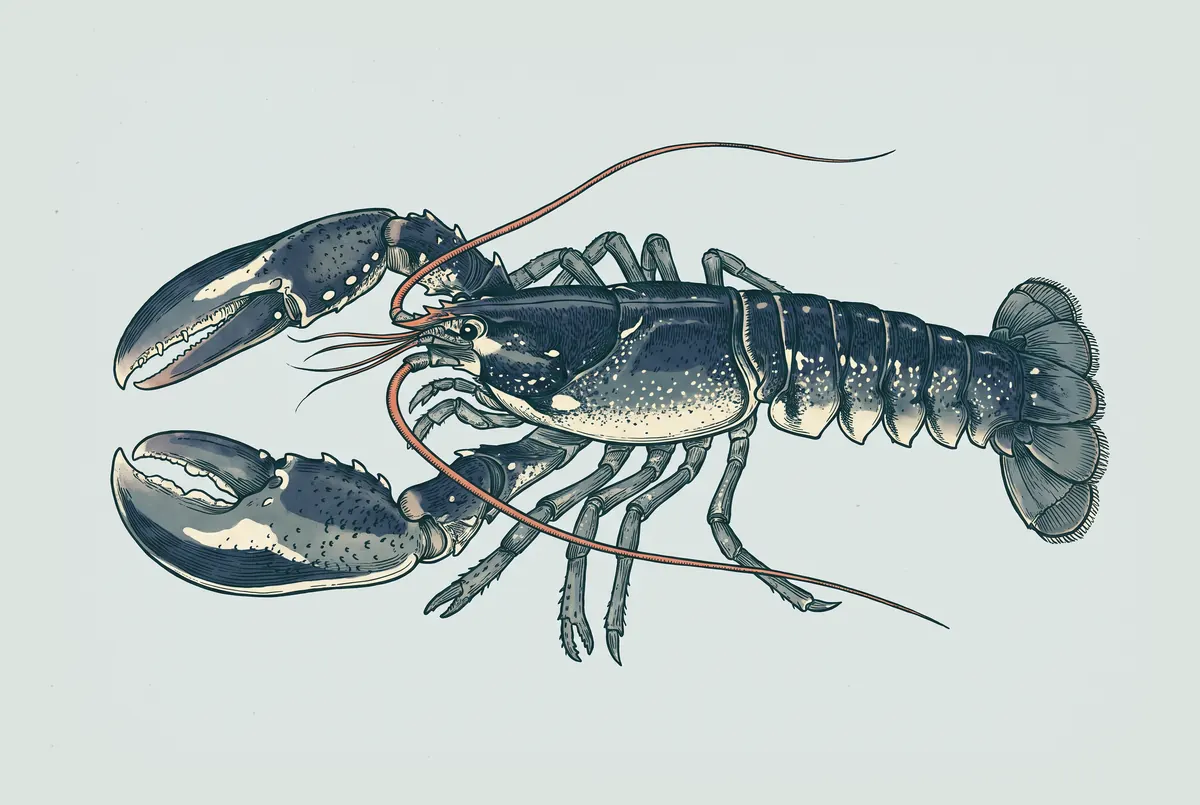
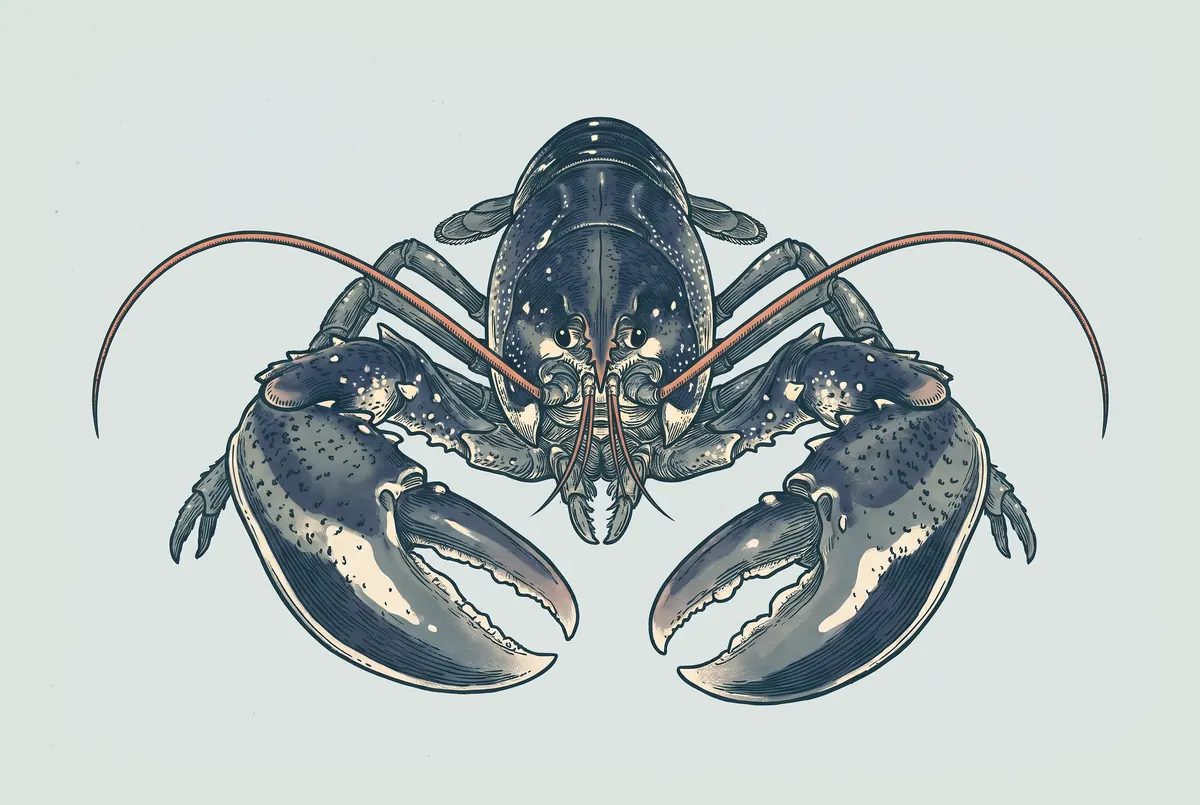
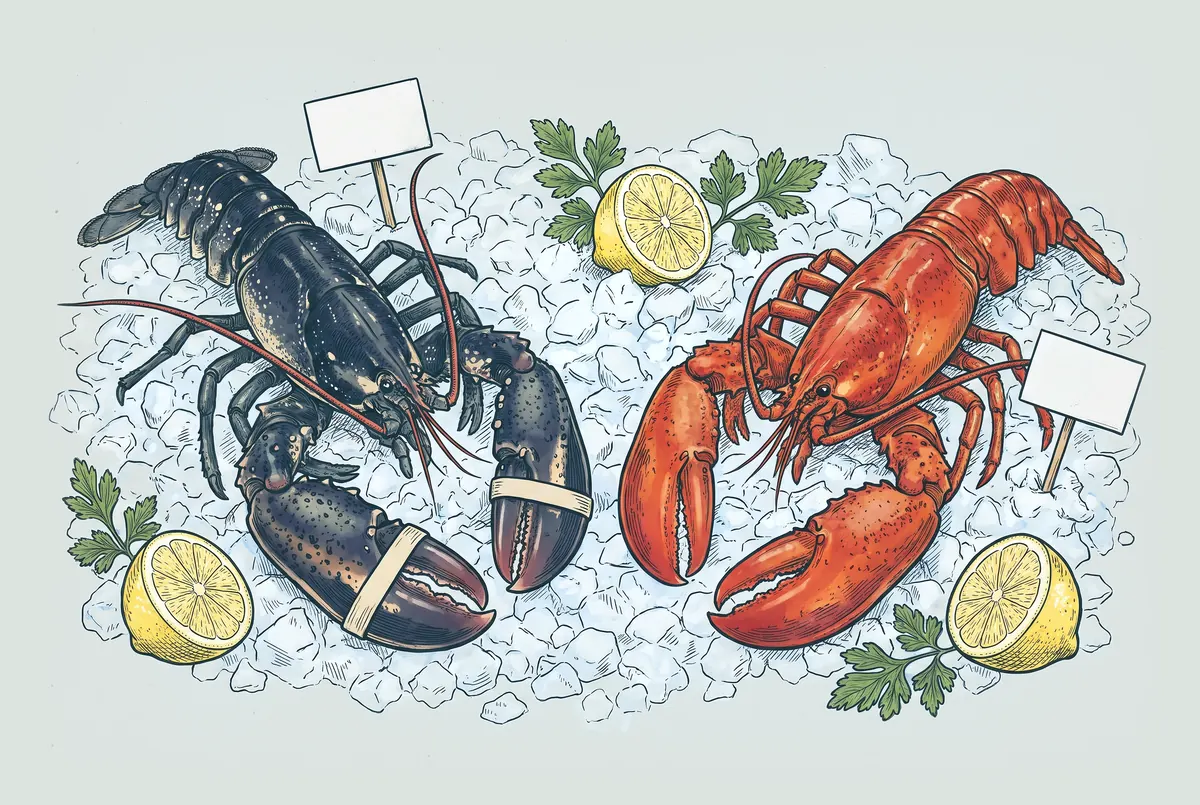
three views
How to recognise lobster
How is the stock doing?
In 2022, 5,063 tonnes of European lobster were caught, mainly by the United Kingdom and France. For American lobster the figure was 152,650 tonnes. The stocks in the western English Channel are in good condition, while those in the North Sea and the eastern Channel are overfished. In Norway the stock has fallen by more than 90% since 1928. With American lobster, the critically endangered North Atlantic right whale gets entangled in the pot ropes.
What to look for when buying
Choose European lobster from the western English Channel, or with the MSC label: that fishery is co-managed by Normandy and Jersey. Do not buy females carrying eggs. The guides disagree on American lobster: the Belgian seafood guide (Zeevruchtengids) prefers Canadian lobster, while the VISwijzer rates all American lobster red.
Lobster in Belgium
In 2021 Belgium imported 1,375 tonnes of lobster, 1,000 tonnes of it from Canada. Belgian fishers landed only 1.2 tonnes of European lobster in 2022.
Questions about lobster
How do you tell European and American lobster apart?
European lobster has white spines on its claws, American lobster has red ones.
Is MSC lobster always a good choice?
Not according to the VISwijzer. It also rates MSC-certified American lobster red, because of the entangled right whales.
Is there farmed lobster?
Hardly any. Norway, the United Kingdom and Corsica farm European lobster, mainly to restock coastal waters.
Sources
- Zeevruchtengids (ILVO/VLIZ), Kreeft (juni 2025)
- Good Fish, VISwijzer Europese kreeft (2026)
- Good Fish, VISwijzer Amerikaanse kreeft (2026)
Consulted in October and November 2026.
More: shellfish, squid and crustaceans
- musselsfarmed: choose MSC
- brown shrimpstock declining
- squidchoose line-caught
- langoustineschoose MSC or creel-caught
- king prawnsfarmed: choose ASC
- Pacific oysterfarmed: good
- eastern oysterfarmed: good
- great scallopdive or well-managed
- Atlantic sea scallopwell managed
- Japanese scallopranched, MSC
- manila clamfarmed: good
- common cocklehand-gathered: good
- razor clamcheck the method
- Mediterranean musselfarmed: very good
- common whelkcheck the size
- Pacific abalonefarmed: good
- common cuttlefishtrap-caught is better
- jumbo flying squidhigh-seas fleets
- Argentine shortfin squidcheck origin
- Japanese flying squidcatches fell sharply
- giant tiger prawnfarmed: choose ASC
- northern prawncoldwater, MSC
- Gulf brown shrimpUS: managed
- Akiami paste shrimplittle known
- Antarctic krillcheck the label
- Dungeness crabwell managed
- Gazami crabheavily fished
- European spider crabMed: rare
- edible jellyfishabundant
- blue swimming crabimprovement projects
- Japanese mantis shrimpdeclining locally
- banana prawnAustralia: MSC
- Sydney rock oysterfarmed: good