- fishtakes
- fish guide
- Japanese scallop
Is the Japanese scallop sustainable?
Short answer · ranched, MSC
Japanese scallop is a good choice. In Hokkaido, young scallops are seeded on the seabed and harvested years later, and the fishery carries the MSC label. Scallops on ropes in Mutsu Bay and China need no feed.
Updated · Japan, China
- Latin name
- Mizuhopecten yessoensis
- Wild or farmed
- Ranched and farmed
- Where
- Japan (Hokkaido, Aomori), China
- Status
- Good choice
- Label
- MSC (Hokkaido)
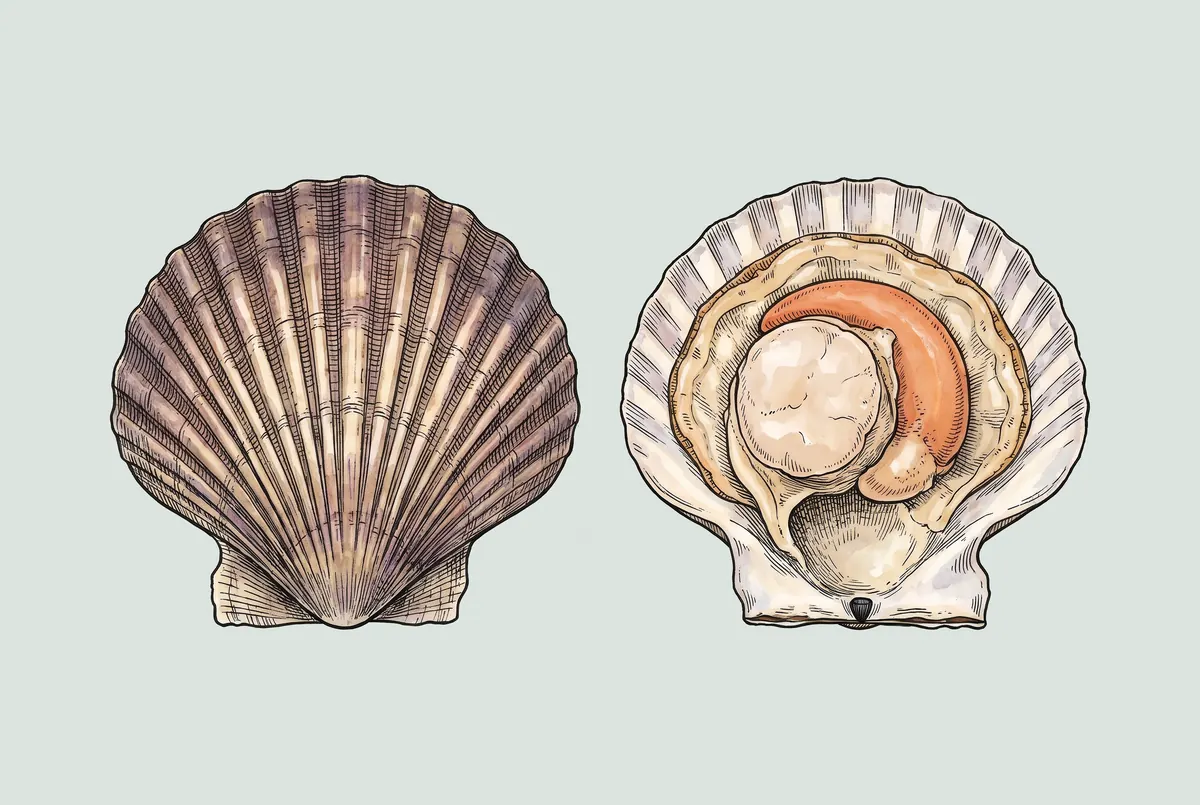
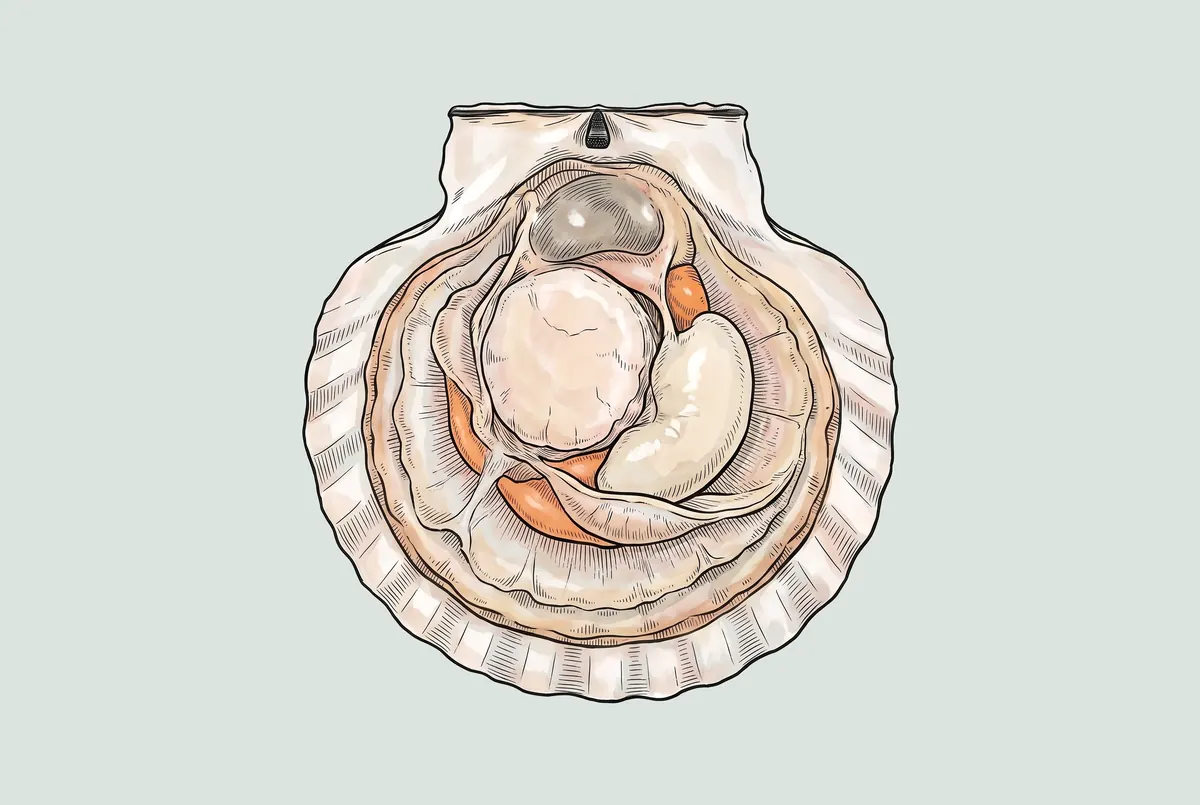
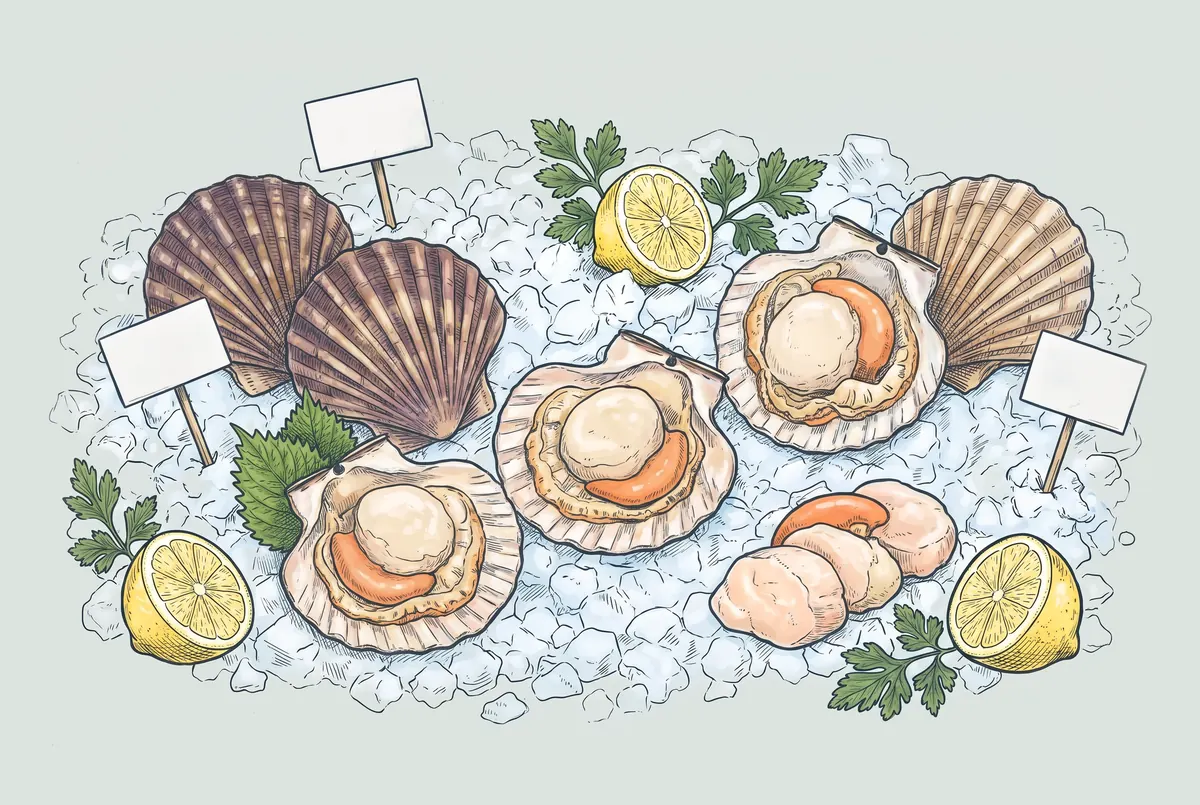
three views
How to recognise Japanese scallop
How is the stock doing?
Sea ranching rotates seabed areas so each is harvested every few years. Like all bivalves, scallops filter their food.
What to look for when buying
Choose Hokkaido or Aomori scallops. They are sold raw for sashimi or as frozen adductors.
Japanese scallop in Japan
Hotate sashimi, grilled scallops in the shell with butter and soy, and dried scallops, a luxury in Chinese cooking.
Questions about Japanese scallop
What is sea ranching?
Seeding young scallops on the seabed and harvesting them years later.
What are dried scallops?
Dried adductor muscles, used in Chinese soups and XO sauce.
Sources
Consulted in October and November 2026.
More: shellfish, squid and crustaceans
- musselsfarmed: choose MSC
- brown shrimpstock declining
- squidchoose line-caught
- langoustineschoose MSC or creel-caught
- king prawnsfarmed: choose ASC
- lobstercheck the origin
- Pacific oysterfarmed: good
- eastern oysterfarmed: good
- great scallopdive or well-managed
- Atlantic sea scallopwell managed
- manila clamfarmed: good
- common cocklehand-gathered: good
- razor clamcheck the method
- Mediterranean musselfarmed: very good
- common whelkcheck the size
- Pacific abalonefarmed: good
- common cuttlefishtrap-caught is better
- jumbo flying squidhigh-seas fleets
- Argentine shortfin squidcheck origin
- Japanese flying squidcatches fell sharply
- giant tiger prawnfarmed: choose ASC
- northern prawncoldwater, MSC
- Gulf brown shrimpUS: managed
- Akiami paste shrimplittle known
- Antarctic krillcheck the label
- Dungeness crabwell managed
- Gazami crabheavily fished
- European spider crabMed: rare
- edible jellyfishabundant
- blue swimming crabimprovement projects
- Japanese mantis shrimpdeclining locally
- banana prawnAustralia: MSC
- Sydney rock oysterfarmed: good